“Using Color to Create Pattern with Turned Taqueté” with Suzi Ballenger
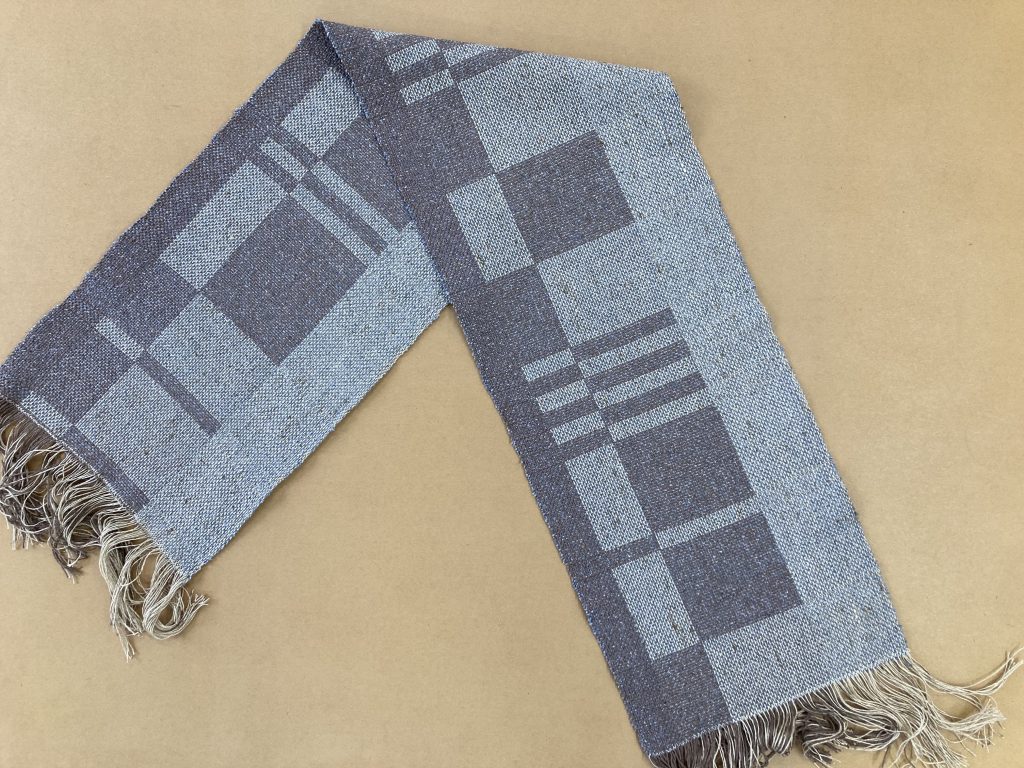
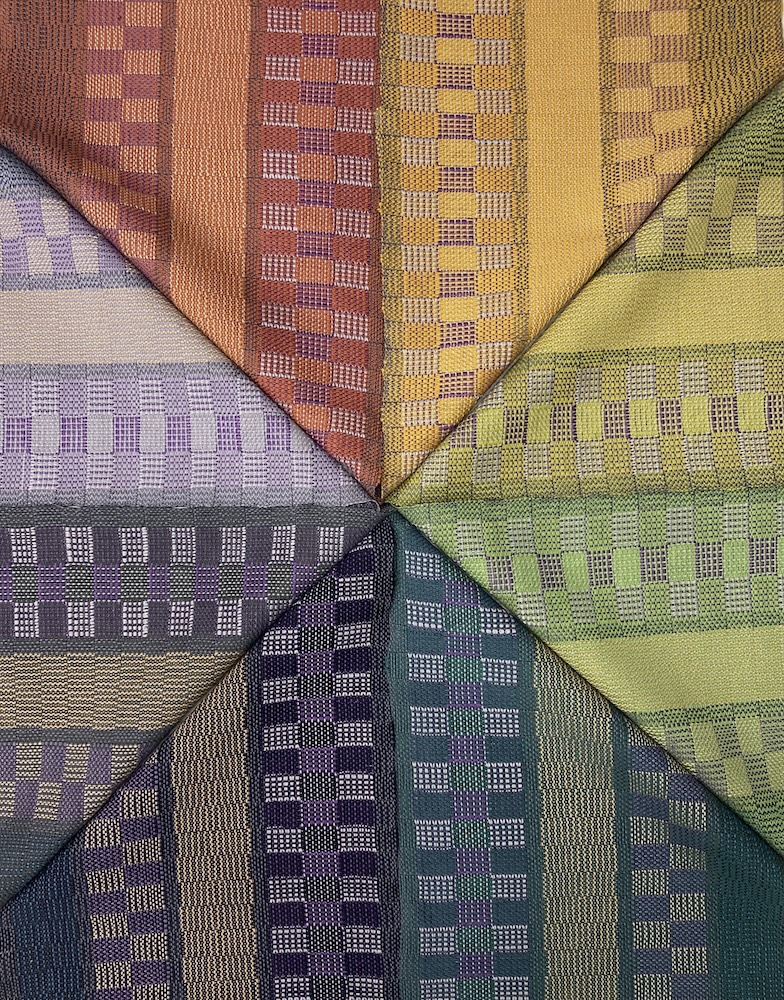
Turned Taqueté is a perfect opportunity to step into the fun of color as the basis for exploring pattern and geometry in weaving. You will be amazed at how easy it is to use color to create designs with this simple and diverse structure. Using color with this technique will convince you there are no “bad” combinations. You will learn how only a few colors can create exciting shapes and designs that are individual and stunning.
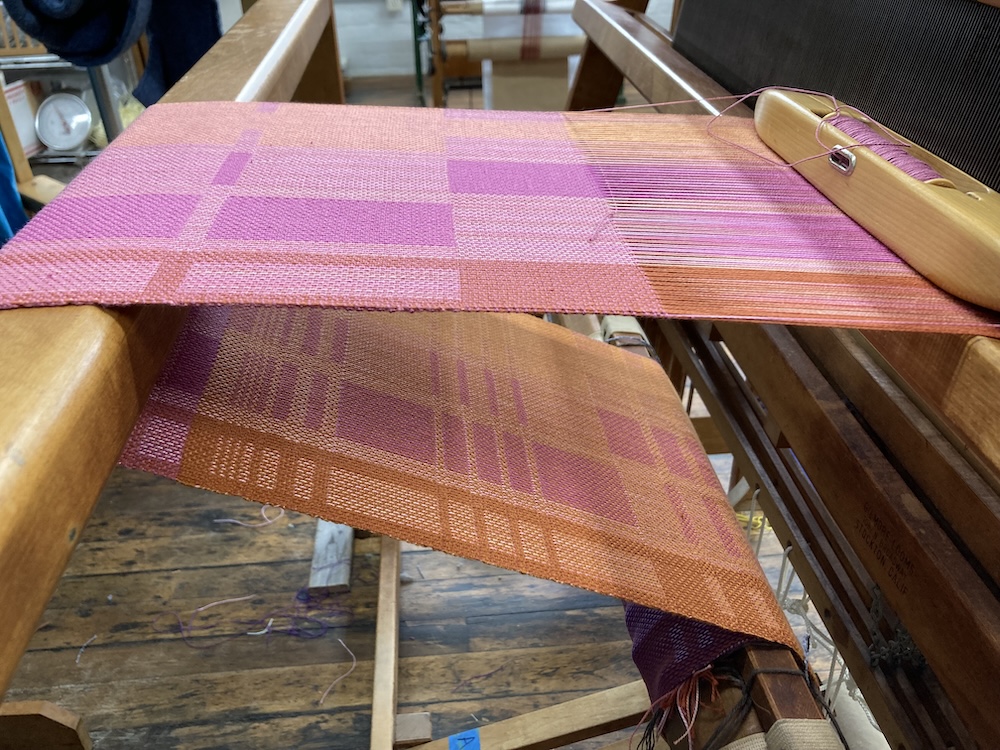
Taqueté is a two-shuttle weft faced weave. It becomes Turned Taqueté when the draft is turned 90 degrees, so the weft treadling becomes the warp threading and the threading becomes the treadling. Turned Taqueté uses 2 colors for the warp and needs only one color for weft. After being turned, the structure then becomes a single shuttle warp dominant weave.
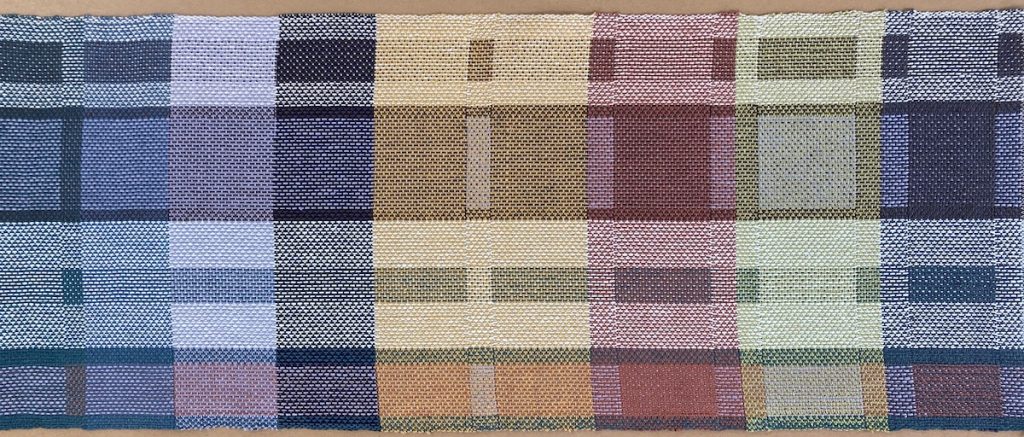
Your individual colors and treadlings will allow you to create multiple widths of squares, rectangles, lines, and crossed intersections. It will convince you, as it did with me, there are no “bad” combinations. Your personal aesthetic will jump for joy as you evolve from idea to idea thorough out a single warp.
Turned Taqueté is a perfect opportunity to step into the fun of color as the basis for exploring pattern and geometry in weaving. You will be amazed at how easy it is to use color to create designs with this simple and diverse structure. Using color with this technique will convince you there are no “bad” combinations. You will learn how only a few colors can create exciting shapes and designs that are individual and stunning.
Taqueté is a two-shuttle weft faced weave. It becomes Turned Taqueté when the draft is turned 90 degrees, so the weft treadling becomes the warp threading and the threading becomes the treadling. Turned Taqueté uses 2 colors for the warp and needs only one color for weft. After being turned, the structure then becomes a single shuttle warp dominant weave.
Your individual colors and treadlings will allow you to create multiple widths of squares, rectangles, lines, and crossed intersections. It will convince you, as it did with me, there are no “bad” combinations. Your personal aesthetic will jump for joy as you evolve from idea to idea thorough out a single warp.
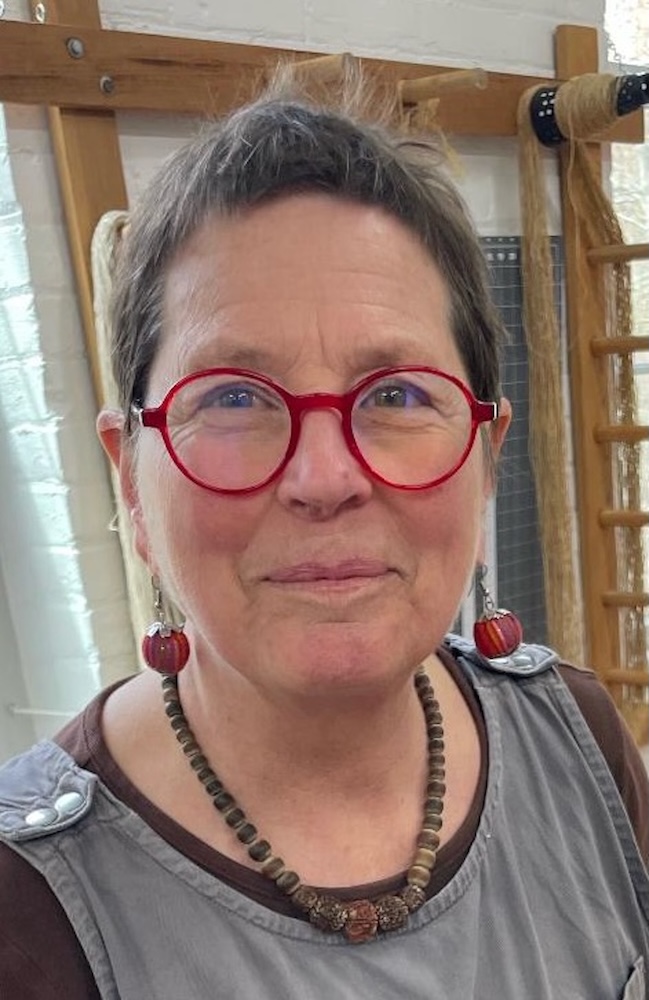
Born and raised in Indiana, Suzi Ballenger, MFA, is a Rhode Island fiber artist and educator known for thinking outside the box. Her aesthetic is informed by the freedom she has always felt and still feels in the outdoors. An unending curiosity for material stimulates her language of hand and craft, believing the fullest expression of a fiber can be realized through observation, repetition, and structure.
There are no ‘bad’ color combinations. It is our expectations that are disappointed with the outcome of our work. Conversations between colors are an opportunity for the resolution of pattern and design. Turned Taqueté is the perfect technique to play with ideas and possibilities.